Overview
The Jerritt Canyon Gold mine is located in Elko County, Nevada, United States. Jerritt Canyon was discovered in 1972 and since the commencement of mining in 1981 to March 2023, approximately 9.85 million ounces of gold were produced at an average grade of 6.6 g/t Au. Open pit mining at Jerritt Canyon produced a total of approximately 5.2 million ounces of gold at an average grade of 5.9 g/t Au while underground mining produced a total of approximately 4.65 million ounces Au at an average grade of 7.7 g/t Au. Since 2010, most of the production has come from the SSX and Smith gold deposits.
The mine was purchased by First Majestic in April 2021 and operated as an underground mine until it was temporarily placed in care and maintenance in March 2023, during a period when gold prices ranged between $1,600 and $1,900 per ounce, due to ongoing challenges including high contractor costs and multiple extreme weather events affecting northern Nevada during the winter of 2022/23. During the care and maintenance period, First Majestic has ensured all environmental, permitting and compliance requirements have been maintained and remain in good standing for a potential restart.
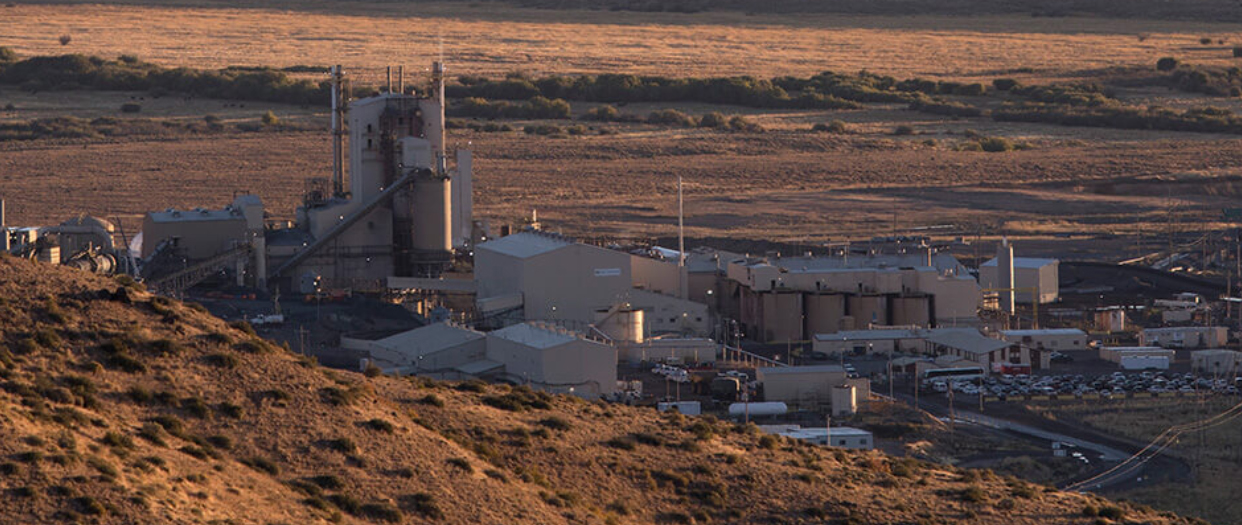
Jerritt Canyon is a 100%‑owned property of First Majestic and hosts one of only three permitted gold processing facilities in Nevada that utilize roasting as part of the ore treatment process. The processing plant has a nominal capacity of approximately 4,000 metric tonnes per day and is supported by a large, contiguous land package totaling 30,821 hectares (119 square miles), of which approximately 85% remains underexplored.
The Jerritt Canyon property hosts a substantial gold mineral endowment. With an effective date of December 31, 2025, Measured and Indicated Mineral Resources are estimated to total 4.1 million ounces of gold, with an additional 3.7 million ounces of gold classified as Inferred Mineral Resources. The 2025 year‑end Mineral Resource Estimates, released on March 31, 2026, with an effective date of December 31, 2025, highlight Jerritt Canyon’s strong sensitivity to bulk‑tonnage, low‑cost open‑pit mining opportunities.
In April 2026, the Company announced Jerritt Canyon’s restart plan as a result of the new expanded Mineral Resource base combined with strengthened long-term gold price assumptions and successful drilling results over the past 2 years.
Restart Plans for Jerritt Canyon Gold Mine
First Majestic will invest $75 million during 2026 to strategically position Jerritt Canyon for a restart of gold production in the second half of 2027. This program is designed to advance the technical and operational workstreams required to complete a restart plan and provide investors with visibility on the asset’s long‑term economics. As part of this plan, the Company has engaged Stantec Consulting Services Inc. to complete a pre-feasibility level study on Jerritt Canyon that is expected to be completed in Q4 of 2026.
Stantec’ study will assess various open pit and underground mine designs & schedule scenarios. Trade-offs of mining methods and mining sequences will be assessed against key constraints. The study will develop an optimized mining plan to determine the optimal production schedule for 2027 and beyond.
In Q2 2026, the Company will commence work to open and rehabilitate the Smith and SSX underground mines, while advancing targeted exploration activities. The program includes approximately 600 metres of underground expansionary development and 19,000 m of underground drilling at Smith–SSX, along with an additional 23,000 m of surface drilling focused on defining near‑surface open‑pit mineral resources, for a total of 42,000 m of drilling in 2026.
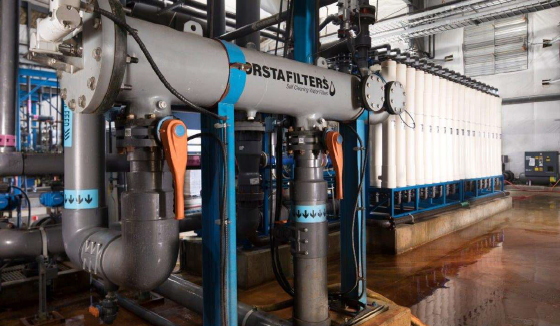
In parallel with pre‑feasibility-level mine planning and ongoing exploration, the Company will advance several key development initiatives, including procurement of the initial underground mining fleet, upgrades to the processing plant and construction of a new deep well to supply fresh water to the processing plant. The Company will also expand the mine’s technical, administrative, human resources, safety, and environmental teams, while completing detailed engineering and technical assessments of Jerritt Canyon’s mineral processing infrastructure.
Restart Plan Capital Investment
The Company plans to invest $75 million in 2026 to support the restart of Jerritt Canyon, with production expected to commence in the second half of 2027. The capital investment breakdown overview is shown in the table below.
Table 1: Jerritt Canyon Restart Program Capital Breakdown for 2026
| Surface Support and Initial Mining Fleet Purchase | $13 million |
| Plant Upgrading and Winterization | $12 million |
| Underground Preparation and Development | $13 million |
| Exploration Program | $15 million |
| Various Technical Studies | $10 million |
| Workforce and Staffing | $7.5 million |
| Dewatering Upgrades | $4.5 million |
| TOTAL | $75 million |
The Company will be providing additional progress updates throughout the year on the restart plan and initial production targets, as well as a revised capital budget as part of its H2 guidance update planned for July 2026.
Stage
Exploration & Development
Resource
Gold
Ownership
100%
Hectares
30,821
Measured & Indicated
4.1M AU OZ
Inferred
3.7M AU OZ
Location
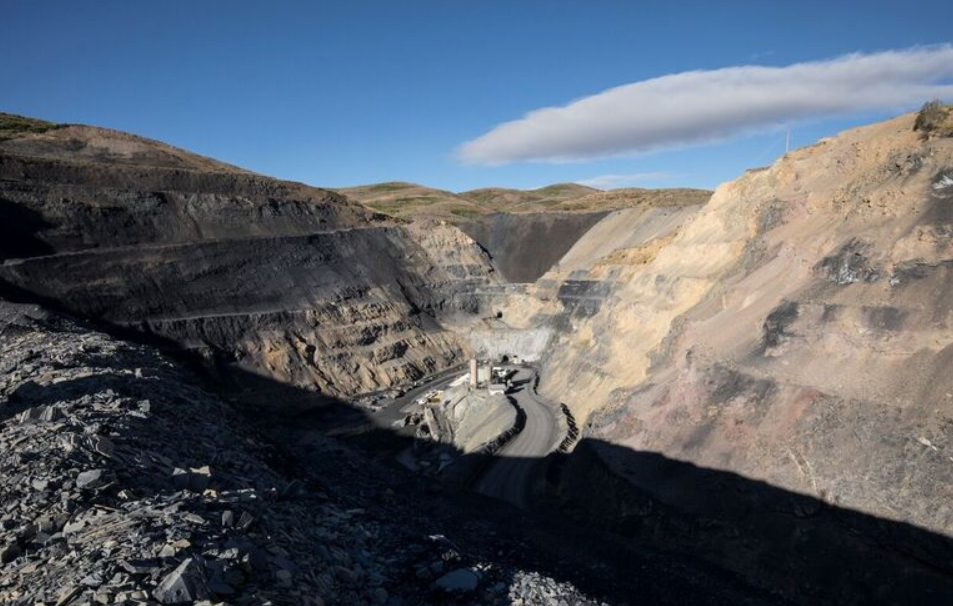
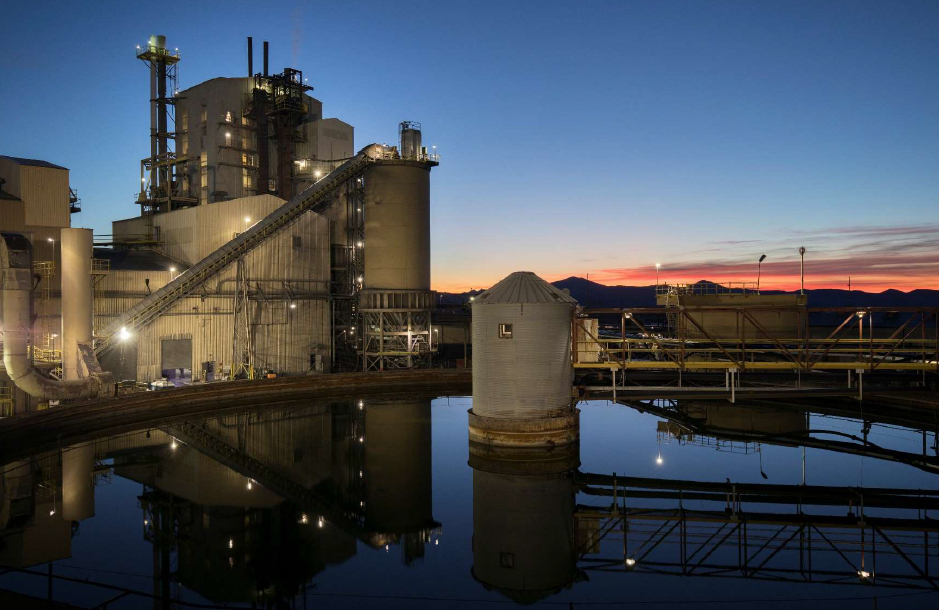
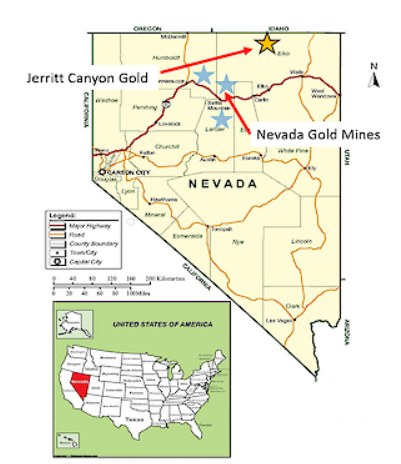
The Jerritt Canyon Gold property is located in Elko County, northeastern Nevada. The mill site, shops, and administration and security buildings are located approximately 45 miles north of the town of Elko. The property forms an irregular area that extends approximately 21 miles north-south and 17 miles east-west at its widest and is approximately 119 square miles. The property is bounded by 116° 10’ west and 115° 78” west longitude and 41° 23’ north and 41° 46’ north latitude.
Operating Highlights
| Jerritt Canyon Production Results | 2022 | 2021* |
| Ore Processes/Tonnes Milled and Leached | 804,206 | 633,400 |
| Gold Ounces Produced | 72,483 | 68,567 |
| Average Gold Grade (g/tonne) | 3.42 | 3.84 |
| Gold Recovery (%) | 82% | 84% |
| Total Production – Ounces Silver Equivalent | 6,022,118 | 5,013,999 |
| Underground Development (m) | 9,614 | 3,916 |
| Diamond Drilling (m) | 130,322 | 48,670 |
| * from April 30 – Dec. 31, 2021 | ||
Geology and Mineralization
The Jerritt Canyon Gold District is located in the Great Basin, north and northeast of the Carlin Trend of gold deposits. Carlin-type gold mineralization at Jerritt Canyon is hosted by silty carbonate or carbonaceous siliciclastic rocks originally deposited as shelf sedimentary rocks during the Paleozoic Era. The Paleozoic host rocks have been imbricated, faulted, and folded through several orogenic events through the Paleozoic Era and Mesozoic Era. Carlin-type gold deposits were emplaced in the Middle to Late Eocene period during an initial phase of extensional tectonics at which time high potassium calc-alkaline magmatic rocks were emplaced. Mafic dikes were emplaced during this phase of igneous activity and trend north-northeast and west-northwest.
The occurrence and distribution of gold mineralization at Jerritt Canyon is controlled by both lithology and structure. Deposits at Jerritt Canyon are mostly stratabound or fault hosted. Gold occurs as very fine, micron-size, particles in pyrite and arsenian pyrite.
For more detailed geological information readers are encouraged to review the Company's most recent NI 43-101Technical Report (PDF).
The Reserves/Resources inventories are reported in NI 43-101 Technical Reports published periodically by the Company. The complete report can be viewed in the Reserves/Resources section or on SEDAR
Mining and Processing
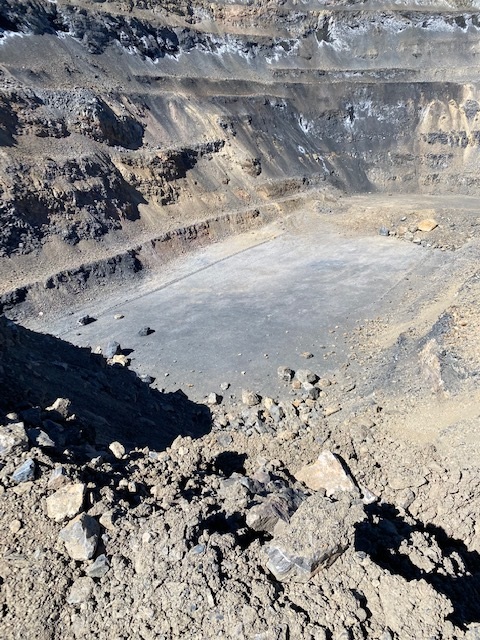
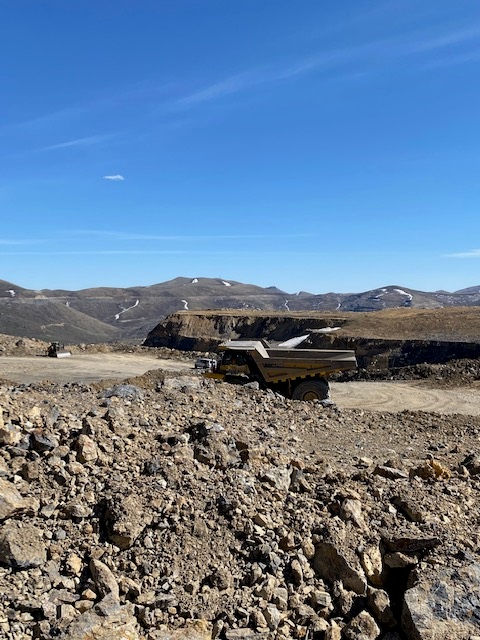
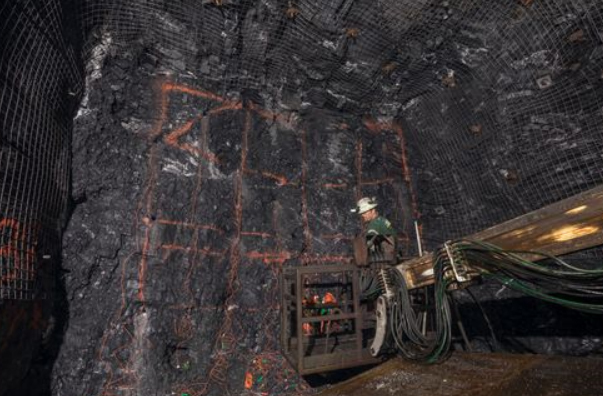
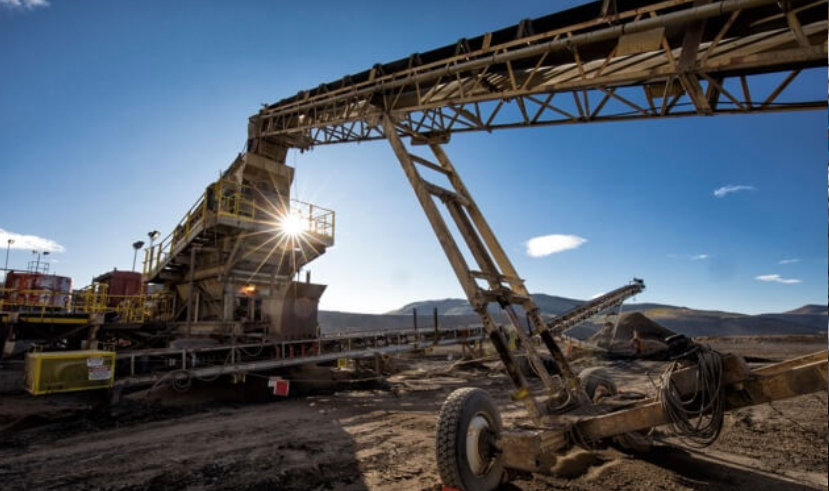
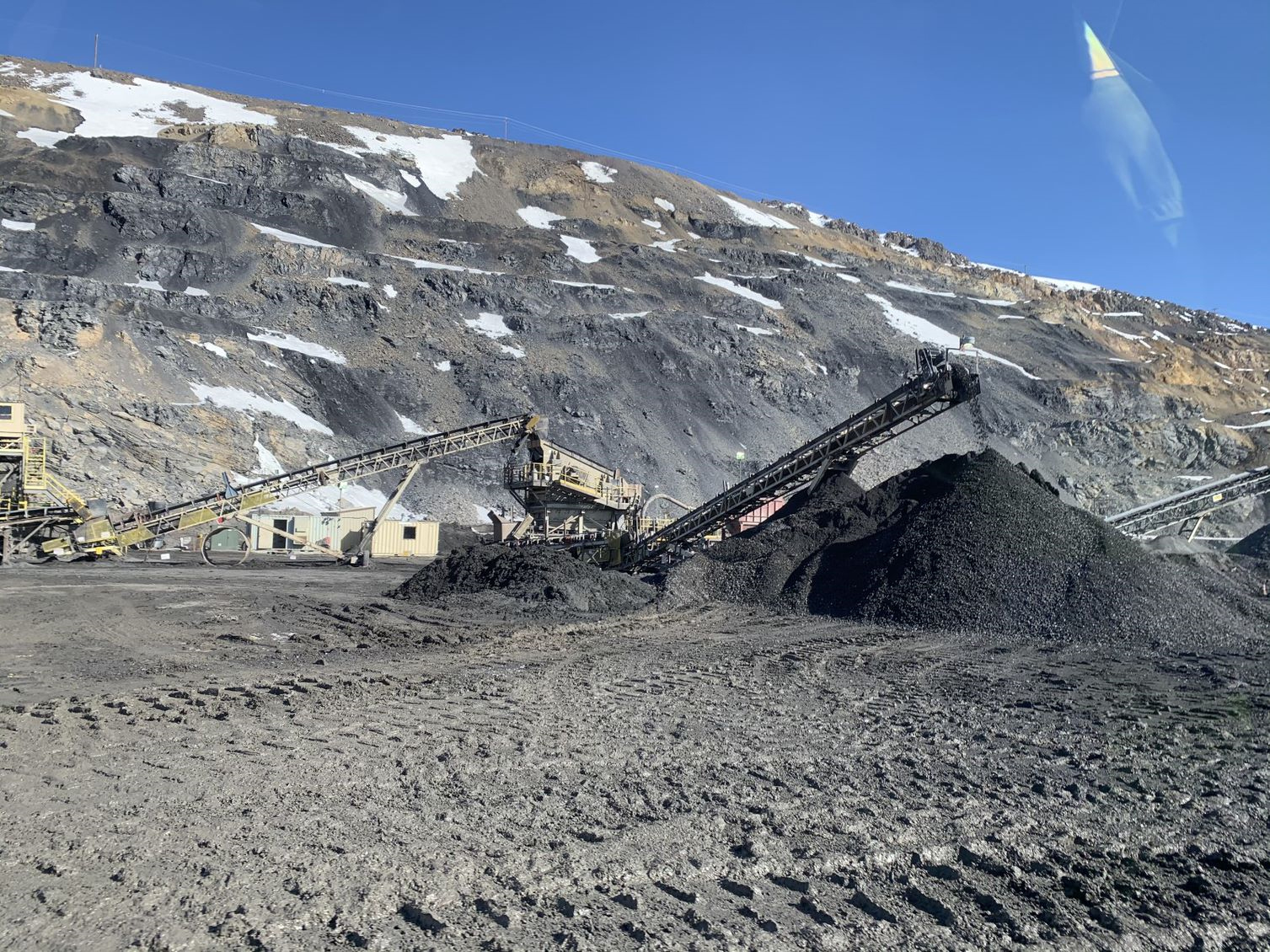
All underground mines in Jerritt Canyon are less than 1000 feet in depth. Low profile 35 and 40-ton tractors are used to remove ore, which is then stacked near the mine portals for grade sampling. After sampling, ore is transported by 150-ton haul trucks to the mills, where the feed is dried and roasted. Gold is recovered using conventional carbon-in-leach processing. High quality gold bars are then shipped for commercial refining and sale.
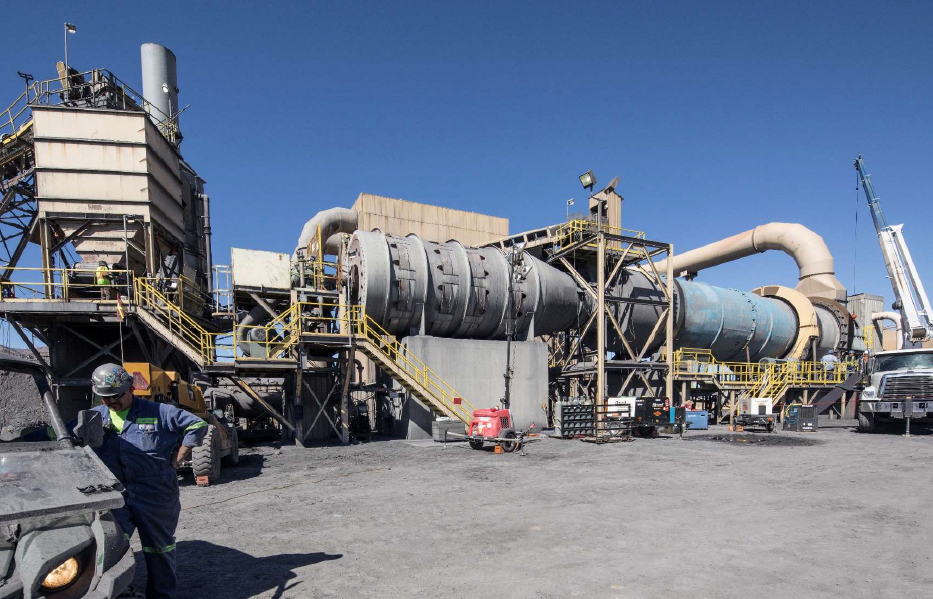
The mineral processing operation at Jerritt Canyon is one of only three processing plants in Nevada that uses roasting in its treatment of refractory ores. Initially, Jerritt Canyon was designed to process oxide and mildly refractory gold ores. In 1989, the roasting circuit was added to the process for the treatment of highly refractory ores which are now being mined and processed at Jerritt Canyon.
The milling process begins with crushing run of mine (ROM) ore to minus five inches in a 42 inch x 48 inch jaw crusher. The crushed ore is then conveyed to a gas-fired drier where the crushed material is dried to about 1% moisture. The dried ore is then conveyed to the secondary crushing circuit, which consists of a single 4.25 foot Symons standard cone crusher operated in open circuit.
The crushed ore is then advanced to the tertiary crushing circuit, which consists of two Symons 4.25 short head cone crushers operated in closed circuit with vibrating screens to produce a minus 3/8 inch product, which is then conveyed to a 2,000 ton fine ore bin that feeds the dry grinding circuit. The dry grinding circuit consists of a 18.5 foot diameter x 14.5 foot long Fuller grate-discharge ball mill driven by a 2,500 hp motor and operated in closed circuit with a Fuller O’Sepa air classier to produce a final ground product sized at about 80% passing 105 microns, which is stored in a 2,000 ton roaster feed bin.
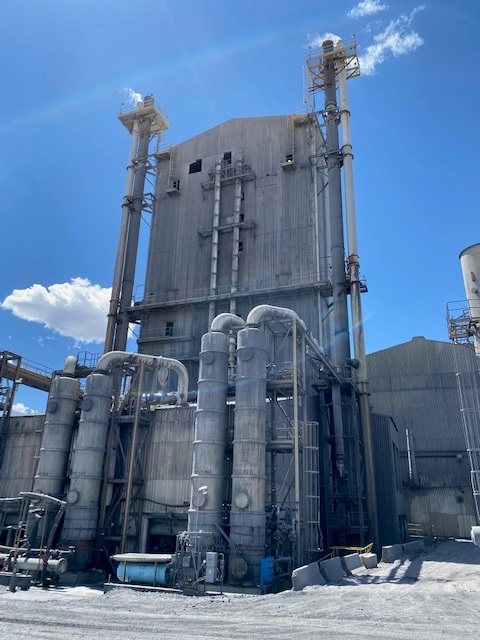
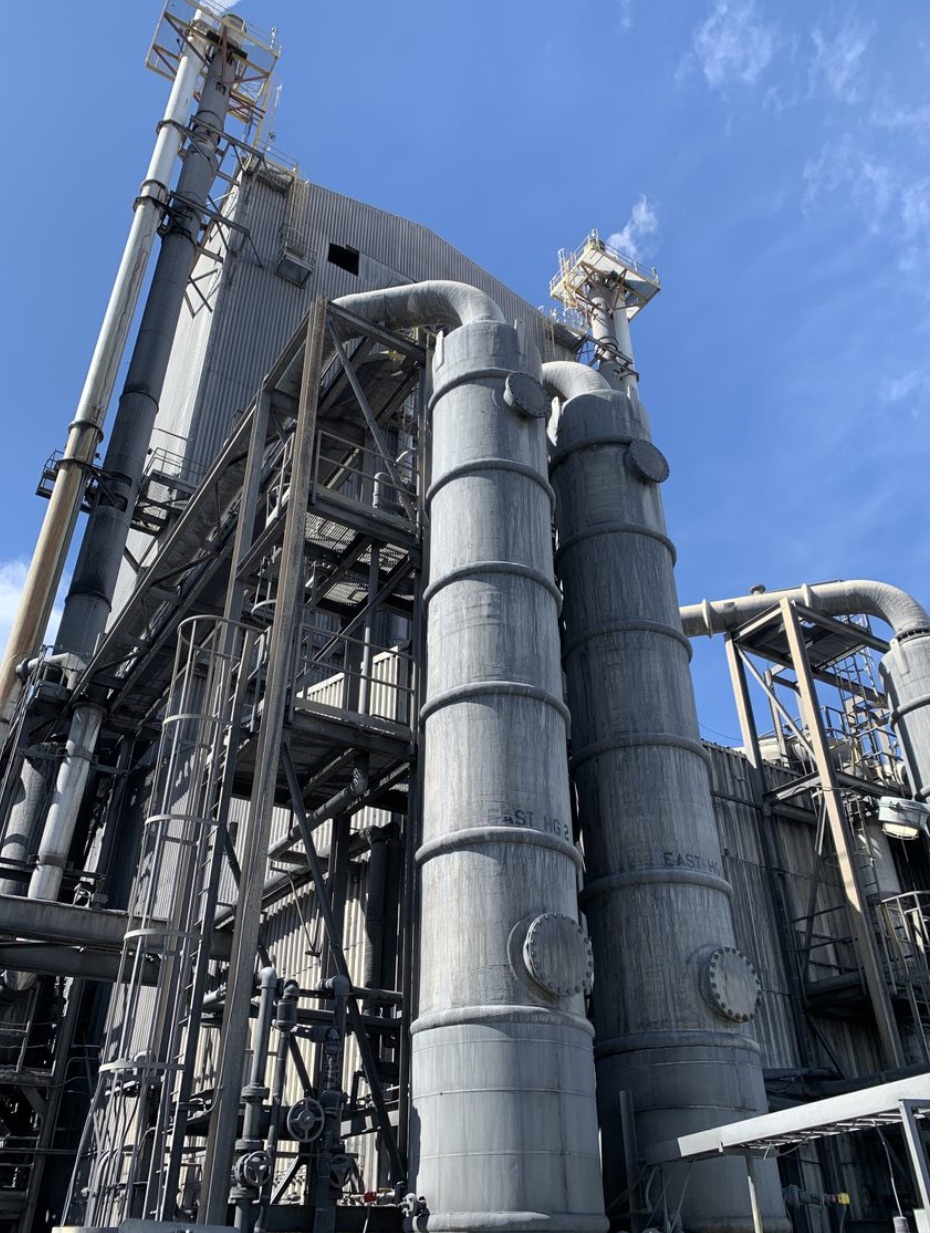
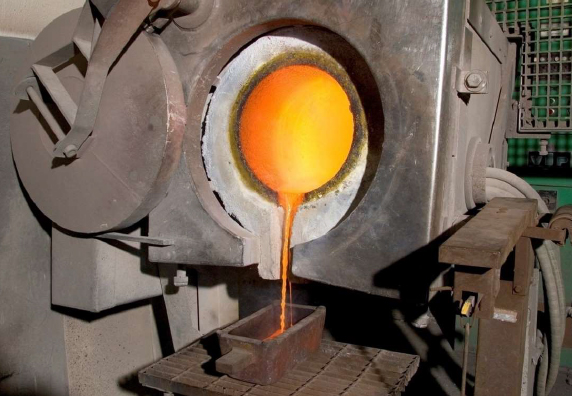
The ore roasting circuit at Jerritt Canyon consists of two Dorr-Oliver two-stage fluid-bed roasters, each rated at 2,000 stpd. Ore is withdrawn from the feed bin by a variable speed screw feeder and lifted with a bucket elevator to the roaster feed system and dropped into the roaster. The roasting process almost completely destroys all of the refractory constituents which makes cyanidation more effective.
The fluid-bed roasting system has no moving parts and can generally be operated at high availability. The use of oxygen as opposed to air as the fluidizing-combustion gas reduces the size of scrubber and achieves high conversions of sulfides and carbon at lower combustion temperatures than would be required by traditional air roasting.
After the ore exits the roaster it drops into quench tanks. The solution is then pumped to a thickener prior to advancing to the CIL cyanidation circuit, where the gold is leached and recovered using procedures standard to the industry.
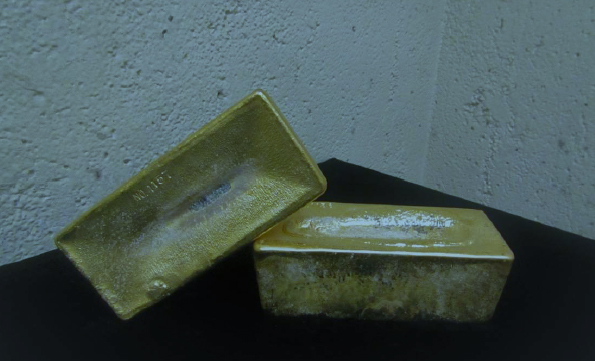
High quality gold doré bars are then shipped for commercial refining and sale.
Technical Report On The Jerritt Canyon Mine, Elko County, Nevada, USA – April 30, 2021
Photo Gallery